Vital Equipment Choices for Different Aspects of Home Renovations
The Foundation of Efficient Renovation: The Right Tools
Home renovations can be a daunting task, but with the right tools, they can transform into a rewarding experience. Choosing the appropriate equipment not only enhances efficiency but also elevates the craftsmanship of any project. This article explores the essential tools required for various home renovation tasks, focusing on flooring, cabinetry, and other key areas.
Flooring: Laying the Groundwork
Essential Tools for Flooring Projects
Installing new flooring is one of the most impactful changes you can make in a home. Whether you're working with hardwood, tile, or laminate, having the right tools is crucial:
- Flooring Nailers and Staplers: These tools are indispensable for hardwood installations. A quality flooring nailer ensures precision and speed, reducing manual effort significantly. Prices typically range from $150 to $500 depending on the model.
- Tile Cutters and Wet Saws: For tile installations, a reliable tile cutter or a wet saw is essential. Wet saws provide precise cuts and can handle large tiles easily, priced from $100 to $1,000.
- Underlayment and Vapor Barrier Materials: Underlayments provide insulation and soundproofing. It's crucial to choose an appropriate material compatible with your flooring type to prevent moisture issues.
Workflow for Flooring Installation
A well-structured workflow improves both the speed and quality of a flooring project. Here’s a step-by-step guide:
- Preparation: Remove old flooring and inspect the subfloor for damages or uneven surfaces.
- Lay Out the Flooring: Before cutting, dry-lay your flooring to ensure a perfect fit and identify any patterns.
- Installation: Begin laying from one corner, using spacers to maintain consistent gaps around edges for expansion.
- Finishing Touches: Install baseboards or trim to cover expansion gaps and add a polished look.
Cabinetry: Craftsmanship Meets Functionality
Tools That Enhance Cabinetry Projects
Cabinetry can transform kitchens and bathrooms into functional masterpieces. To achieve precision and quality in cabinetry projects, consider these tools:
- Table Saw: This tool is invaluable for making precise cuts in wood panels. A good table saw costs between $200 and $1,500.
- Pocket Hole Jig: For creating strong joints without visible screws, a pocket hole jig is essential. These are available from $20 to $150.
- Router: A router adds decorative edges and makes smooth cuts in wood. Prices range from $80 to $400.
Creating Efficient Cabinetry Workflows
A structured approach to cabinetry can greatly impact the outcome. Here are key steps:
- Design Planning: Start with detailed plans including dimensions and materials needed.
- Material Preparation: Cut all pieces using the table saw before assembly to ensure consistency.
- Assembly: Use pocket holes for discreet but strong connections. Test-fit components before final assembly.
- Finishing: Sand all surfaces smoothly before applying stains or finishes to achieve professional results.
The Versatility of Multi-Purpose Tools
Apart from task-specific tools, multi-purpose equipment plays a vital role in home renovations, offering flexibility across projects. These include:
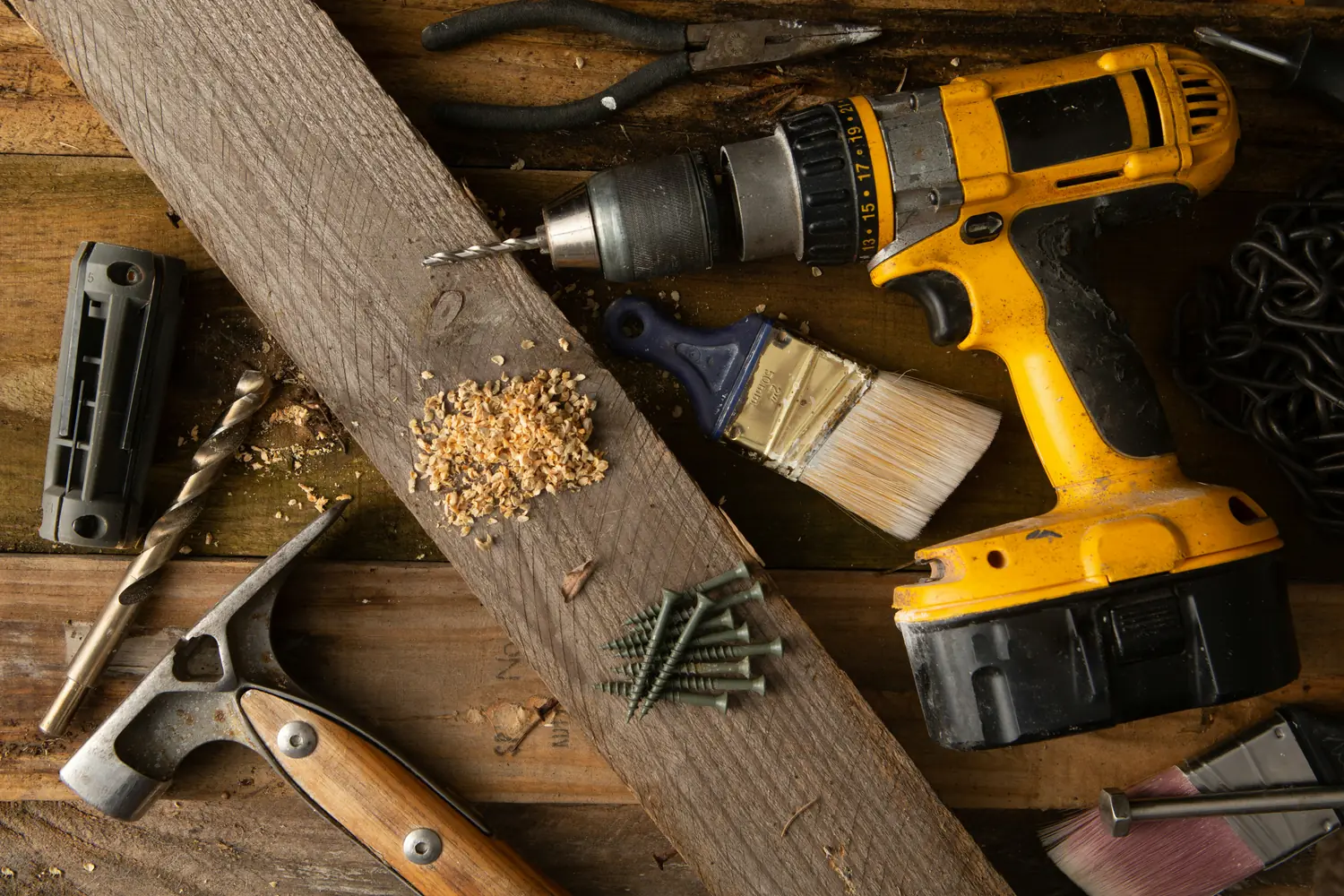
- Cordless Drill/Driver: An indispensable tool in any renovation kit, it handles everything from installing screws to drilling holes. Opt for models with multiple speed settings for varied tasks, costing between $50 to $300.
- Oscillating Multi-Tool: This tool can cut, sand, grind, and scrape with the appropriate attachment. It's ideal for tight spaces and precision work, priced from $100 to $300.
Safety Equipment: Protecting Your Investment
No toolset is complete without safety gear. Protect yourself with quality equipment such as:
- Safety Glasses and Ear Protection: Essential for protecting eyes from debris and ears from loud noise.
- Dust Masks/Respirators: Crucial when cutting wood or handling materials that produce dust and fumes.
The Trade-Offs: Cost vs. Quality
Selecting tools often involves balancing cost against quality. Investing in high-quality tools can save money in the long run due to durability and better performance. However, if you're only doing one-time renovations, renting or buying budget-friendly options might be more economical.
A study by The Home Improvement Research Institute suggests that homeowners who invest in mid-to-high-end tools see a 30% increase in project efficiency and satisfaction rates compared to those who use cheaper alternatives.
Conclusion: Equipping for Success
The right equipment can turn challenging home renovations into manageable projects. By investing in high-quality, task-specific tools and understanding their use within an efficient workflow, homeowners can enhance both the efficiency and craftsmanship of their renovations. As you embark on your next project, remember that the quality of your tools will often reflect in the quality of your work.