Evaluating Concrete and Wood for Longevity in Outdoor Applications
The Battle Between Concrete and Wood
When embarking on a DIY outdoor project, choosing the right material is crucial not only for aesthetics but also for durability and maintenance. Two of the most common materials used in outdoor projects are concrete and wood, each with its own set of advantages and disadvantages. This article will explore these attributes, helping you decide which material best suits your project.
Durability: Standing the Test of Time
Concrete: The Durable Powerhouse
Concrete is renowned for its durability and strength. It can withstand harsh weather conditions, heavy weights, and constant use. Unlike wood, concrete does not warp, rot, or become infested with pests like termites. For long-lasting projects like patios, walkways, and garden walls, concrete is often the preferred choice.
Pros:
- Resistant to weather extremes including rain, snow, and heat.
- Low risk of physical damage from impacts or heavy loads.
- Non-combustible and resistant to fire.
Cons:
- Can crack under significant temperature changes if not properly installed.
- Requires skilled labor to pour and finish.
- Permanent installations make adjustments difficult post-construction.
Wood: The Timeless Classic
Wood offers natural beauty and a classic look that many find appealing. When treated and maintained properly, wood can last a long time in outdoor settings. However, its vulnerability to environmental conditions necessitates regular upkeep.
Pros:
- Warm aesthetic that blends naturally with garden environments.
- Flexible design options, easy to cut and shape.
- Sustainable if sourced responsibly, contributing to eco-friendly construction.
Cons:
- Susceptible to rot, warping, and pest infestations.
- Requires regular maintenance such as staining or sealing.
- Fire risk in certain environments.
Aesthetic Considerations: Crafting the Perfect Look
The Raw Appeal of Concrete
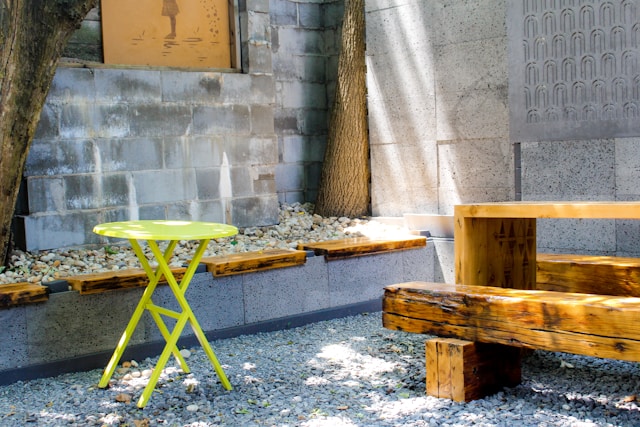
Concrete offers a modern, industrial look that can be both sleek and minimalist. Its neutral color palette makes it versatile for various designs. Stamped or colored concrete can also mimic other materials like brick or stone.
However, for DIY enthusiasts aiming for more elaborate decorative designs, the technical skills required can be a barrier. Techniques like staining or stamping demand precision to avoid costly mistakes.
The Natural Charm of Wood
Wood's aesthetic appeal lies in its natural texture and grain. It can be finished in a variety of ways — painted, stained, or left natural — providing a wide range of customization. This adaptability makes wood ideal for personalizing spaces such as decks or pergolas.
The caveat is that wood's appearance can degrade over time without proper care. Regular maintenance is necessary to keep it looking fresh and to protect it from the elements.
Maintenance Requirements: The Cost of Upkeep
Caring for Concrete
Concrete requires relatively low maintenance compared to wood. Sealing it every few years can prevent water absorption and stains. While repairs may be needed for cracks due to settling or extreme weather changes, they are generally minor and infrequent if the concrete is properly mixed and poured initially.
Maintaining Wooden Structures
Wood demands more intensive maintenance efforts. Regular treatments with sealants or stains are necessary to protect against moisture and UV damage. Sanding and refinishing may also be needed every few years depending on exposure levels.
If untreated, wood can succumb to various forms of decay more rapidly than concrete, leading to additional repair or replacement costs over time.
Practical Tips for Your DIY Projects
When to Use Concrete
If you’re planning a project like a patio, driveway, or retaining wall where longevity and load-bearing capabilities are paramount, concrete is the material to opt for. For DIYers with experience in mixing and pouring concrete, or those willing to invest in professional assistance, this can provide a robust solution.
Best Practices for Wooden Projects
Wood is best suited for projects where flexibility in design is desired — such as building pergolas, decking areas, or garden beds. For those keen on woodworking skills, it offers rewarding challenges in crafting unique designs that complement outdoor landscapes.
Select pressure-treated wood or naturally resistant species like cedar or redwood to enhance durability against pests and decay.
Final Thoughts: Choosing Wisely for Your Space
The decision between concrete and wood depends largely on your project's specific needs — considering factors such as expected traffic load, aesthetic goals, budget constraints, and willingness for maintenance work. By weighing the pros and cons detailed here, you can make an informed choice that ensures both functionality and beauty in your outdoor space for years to come.